Next day high quality fast printing | GUARANTEED delivery TOMORROW!

Hippoprint is the UK’s leading guaranteed next day printer! We offer 24 hour turnaround quality fast printing for all your leaflets, cards & other printing.
Sage pay
Next day

Hippo Blog

Mar

23

Litho vs digital

Posted by: Administrator

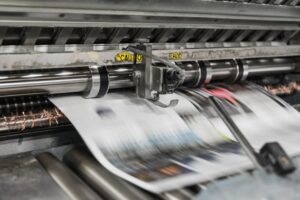
Despite the vast improvements in digital printing methods, modern litho (lithographic/lithography) printing still remains the primary means of printing long-run jobs.  Litho printing has an expensive and time consuming setup process but a cheaper and faster print speed than current digital technology.  To print litho, plates must be made which takes time, money and effort, then the colour must be controlled which takes more time and paper.  A litho press also requires extensive maintenance and cleaning and highly skilled operators.

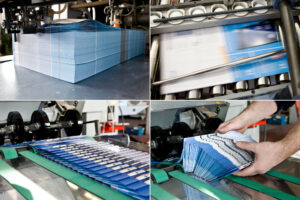
Digital printing is most commonly done on big laser printers and, unlike litho, has a very low first print cost thus making it ideal for short-runs.  Unlike litho, you do not need to print set-up sheets for position and colour, the operators can be trained in a far shorter space of time and are not required to be as hands-on, there are no expensive plates and the daily maintenance is significantly less.  All of this leads to digital being a far more economical means of printing low quantities. 

In terms of quality it is generally accepted that litho is superior to digital, though this is not always the case by any means and a lot of customers will in fact prefer the brightness and gloss that digital tends to put into a job.  However litho tends to have better registration if run on a well maintained 4+ colour press so there is less potential issue with alignment in the end job.  The colours, solids, gradients and halftones also tend to be “truer” in litho.  On the opposing side, digital allows for variable data from sheet to sheet (numbers, names or even small images can be changed from sheet to sheet), it also allows very fast output of first print and all following prints should be similar.

In both cases the quality of the job will be affected by the quality of the printing press, the paper or card used, the skill and care of the operator and the maintenance of the press itself.  All of these are aspects that will vary from business to business and even within a business, so will be something you need to learn from experience. 

As a general rule of thumb, if you want 5000 flyers and have a week to spare then litho is the best route for you, however if you need 1000 leaflets tomorrow then digital is a far more economical option.

comments (0)

Jul

27

Design for Print / How to design print ready artwork

Posted by: Administrator

hippo_artwork.jpg It doesn′t matter whether you are self taught or have studied a degree in graphic design, the chances are you don′t know much about design for print unless you have experience of using professional printing services. Firstly, for the purposes of this blog I will assume you have some basic skills in at least one design package, and no, Word does not count.
I won′t be looking at the marketing or branding elements of design in this particular blog but rather the mechanics of creating print ready artwork.

Let us say you want to design a flyer promoting, oh I don′t know, how about a next day printing service, and maybe your company is called something like Hippoprint?

The easiest way is to use a design template like the ones we offer free on our site. For this I will create an A5 flyer using the Illustrator A5 template . Even if you don′t have Illustrator you should be able to open this with acrobat to view it. You will notice that there are 3 boxes on the template:
1) The inside one is the detail line which no design critical details such as text, or graphs should cross, to ensure that any movement in the cut does not cut into important elements of the design.
2) The middle line is the cut line, to which the sheet will be cut.
3) The outside line is the bleed line, which any background design, colours, patterns, must cross to ensure that if there is movement in the cut it will not leave undesired white borders.

The detail line should be about 3mm inside the border of the design and the bleed line should be about 3mm outside of the design. As explained above, this is to stop unwanted white borders and loss of impact of the flyer due to cutting into critical elements of the design.

crop marks

Now that we have our shape in mind and know our limits, we must consider the other elements of design for print;

How many dpi should I save my file as for printing? 300dpi is generally fine for printing and anything above this is normally excessive. Below it and you will start to notice a drop in quality.

What about fonts? When designing for print all fonts should be converted to curves (made into a part of the picture) before sending to your printer (Hippoprint of course). This means that if the printer doesn′t have the font you have used it doesn′t matter as it is now a part of the image. If you send it as text and they don′t have the font then it will replace it with another font or worse drop letters or whole words.

What file format should I save my final design in to send to the printers? The best format and the industry standard in printing is a print ready pdf (300dpi pdf), but many printers will also accept tiffs, jpg′s, eps, or various design package formats. If you can, stick to 300dpi pdf′s.

Designing in CMYK or RGB? CMYK (Cyan, Magenta, Yellow & Key Black) are the four colours most commercial printers use to print your artwork and as such if you supply your artwork in RGB (red, green & blue) it will be converted to CMYK and the colours will change. So in short, design in CMYK for printing.

You should always look at your specific printers artwork requirements or specifications before sending them your work to avoid disappointment and unnecessary delays.

comments (1)

Jul

12

Paper and Card for Print

Posted by: Administrator

blog2.jpg

This is just a little blog explaining a bit more about the paper and card we use and why we choose these particular stocks. We only use premium brand stocks as it ensures consistently high standards for our customers and leads to less issues for us during the print process.

Firstly, our flyer stocks: 130gsm gloss paper - this is the ideal economy paper for flyers and leaflets, it has some thickness but not so much that it becomes weighty, whilst the gloss makes it eye catching. This is very similar to the shiny paper that most of the flyers that come through your door are printed on, and is generally considered the industry standard for leaflets. 170gsm Gloss paper - this paper offers a bit more thickness than the 130gsm gloss, giving it a more substantial feel and a classier look. This is typically used for more important leaflets, pamphlets, and other printed promotional items where the distribution is more defined. 300gsm gloss card - this card is significantly thicker than our other stocks in the flyers and leaflet range. It is similar to the club flyers handed out to promote events but is also perfectly suited to tradeshow handouts or pre-printed postcards.

Our stationery (not stationary) range: 100gsm standard - your usual copier paper is 80gsm bond, this is 100gsm bond and as such has 25% more weight to it. It is still a similar level of whiteness and smoothness to copier paper but feels much better due to the added thickness. This is ideal for letterheads and compliment slips. 120gsm premium - for our 120gsm premium stationery (not stationary) we use 120gsm DCP from Clairefontaine. This paper is extremely good and adds a very classy feel to your compliment slips and letterheads. It is crisp white (significantly whiter than the standard paper), with a lush smooth finish and even more weight to it. This paper is especially good if you use a fountain pen to write and is without a doubt the paper of choice for the staff here at Hippoprint. 330gsm board - the board we use to print our business cards is a premium 330gsm Ivory board (Ivory is the type of board not the colour - it is in fact a clean white colour) which has a very substantial feel to it without being ridiculously thick. We have over the years tried many stocks but despite its expense have settled on this one. In our opinion 400gsm is a bit too thick and unless laminated doesn′t really look or feel that great, anything less than 300gsm is too flimsy and feels cheap. 330gsm Ivory board offers enough thickness to give the right impression to your customers, and the finish is a smooth but tasteful finish eliminating the need for laminating.

Wide Format Posters: 190gsm Gloss paper - this is the stock of choice for our wide format posters. It is very glossy and similar to photo paper in appearance. This paper will give your A0, A1 and A2 posters the desired impact.

Stickers: Crack back - this sticker material comes in large sheets allowing us to print and cut easily. If you have had a sticker that is cut to size and has a backing that has slits along it on an angle then you will have had stickers on crack-back before. This material is ideal for short runs of stickers, though is not suitable to long term outdoor use.

Well, I hope this has been of some use to you and should you need any advice or have any questions please don′t hesitate to ask.

comments (0)

Jun

30

Welcome to Hippoprint

Posted by: Administrator

12mary.jpg

Hello and welcome to my new blog, I am the Hippo behind Hippoprint and I thought it would be nice to share my musings on print, design and a variety of other random subjects.

However this being my first blog I am going to dedicate it to explaining a little more about my site and how my company works. The chances are you already realise that my company specialises in next day printing for England, Scotland and Wales, but do you realise exactly what this means? It means if you place an order before 1pm (often later if you contact me) I will print it today and guarantee to deliver it tomorrow; that is fast printing! How do I do this you ask, well through a combination of the latest digital printing technology, a great team of staff, fast delivery services and throwing, my not inconsiderable, weight around.

My site is designed to be as simple and effective as possible for all my customers, with features like the price updating on changes in quantity and paper type, without time lost in refreshing. At the same time I want it to be an enjoyable place to visit that people want to tell their friends, family and colleagues about, something that has bit of "me" in it.

I am proud of the large number of people that regularly use my site as a resource for print templates for their business card designs, a5 flyer designs and other design requirements and am always trying to think of new resources I can add to help my customers.

comments (0)